
Self-consumption and electric vehicle charging

Installing photovoltaic self-consumption systems, together with electric vehicle charging systems, mitigates the impact of CO2 emissions and helps reduce your electricity bill while promoting environmental sustainability.

Increased energy costs and the commitments made to international organisations are leading the industrial sector to overhaul its energy consumption practices. This change in direction seeks to transform the industry's consumption habits by encouraging the use of renewable energy sources to reduce both consumers' electricity bills and their CO2 emissions.

Another indisputable commitment is the inclusion of systems for charging electric vehicles, helping to minimise the use of fossil fuels in both corporate vehicle fleets and in the employees' own vehicles

Electrical self-consumption

Reduce your bill by generating your own energy

Help reduce CO2 emissions by generating clean energy with photovoltaic self-consumption systems, and save on your installation's energy bill.

Electric mobility

Electric vehicle charging for fleets, employees and visitors.

Offer an electric vehicle charging service to the customers and workers at your facility by installing AC or DC charging solutions tailored to any type of vehicle and connector in use.

Solar canopies and mobility

Take advantage of your car park to save and charge electric vehicles

Take advantage of your own car park and install photovoltaic canopies to generate clean energy while your customers and employees charge their electric vehicles.

CDP-0

Features zero feed-in to avoid injecting any excess electricity to the grid. Use all the energy generated and avoid having to register your connection point.

Self-consumption of renewable electricity

Save on your electricity bill by using your own renewable energy

Solar PV energy is one of the most economical and reliable renewable sources on the market today. The constantly rising price of electricity, together with the drop in the prices of the components that make up a photovoltaic installation, is resulting in a direct increase in the implementation of these systems.

The concept of the energy transition is currently accepted worldwide, and is incentivised by the vast majority of international governments, whose outlooks confirm its essential role in industrial facilities to contribute to a new energy revolution.
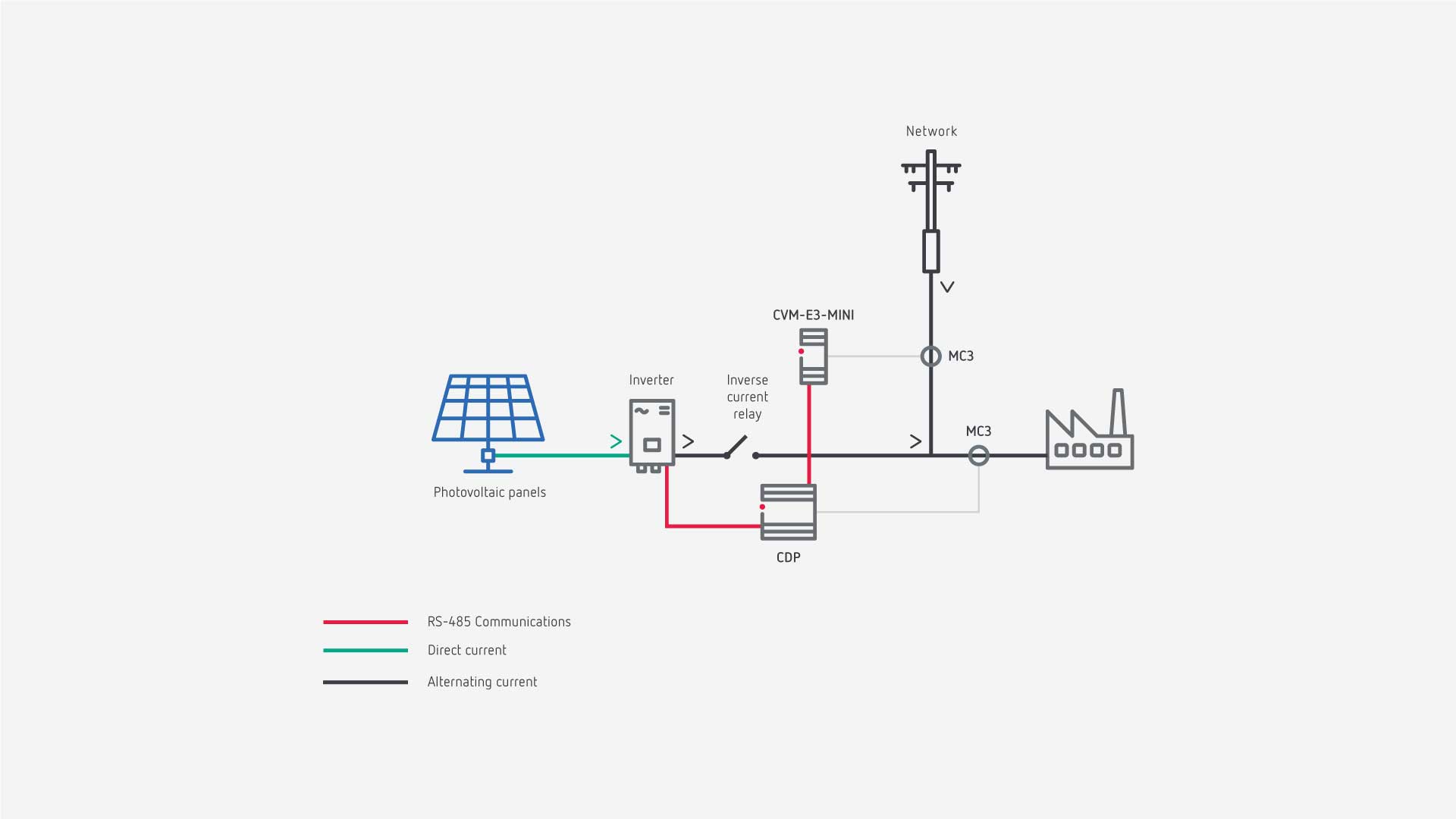
PV-MONITOR ENERGY MANAGER

  • Detection of low performance ratio (yield index) in the PV installation
  • Instantaneous energy balance of consumption compared to PV generation
  • Self-consumption percentage calculation for the current month (solar fraction)
  • General alarms for the PV installation to warn of abnormal operation (email notifications)
  • Reduction in energy consumed from the electrical network
  • Reduced atmospheric CO2 emissions

Electric mobility

Help your customers and employees charge their electric vehicles.

As a strategic plan to save costs and minimise its carbon footprint, much of the industrial sector is renewing its current fleet of vehicles with new plug-in hybrid or 100% electric models. Because of this, the deployment of an infrastructure to charge electric vehicles in the industry is becoming essential in order to ensure the transport system of both company and employee vehicle fleets.

It is possible to install slow-charging systems in industrial facilities to charge company vehicles when not in use, or to charge the vehicles of employees or visitors.

Fast or ultra-fast charging stations should also be installed for those times when the need for urgent travel requires an immediate charge.

Self-consumption and mobility

Solar photovoltaic canopies with a system for charging electric vehicles

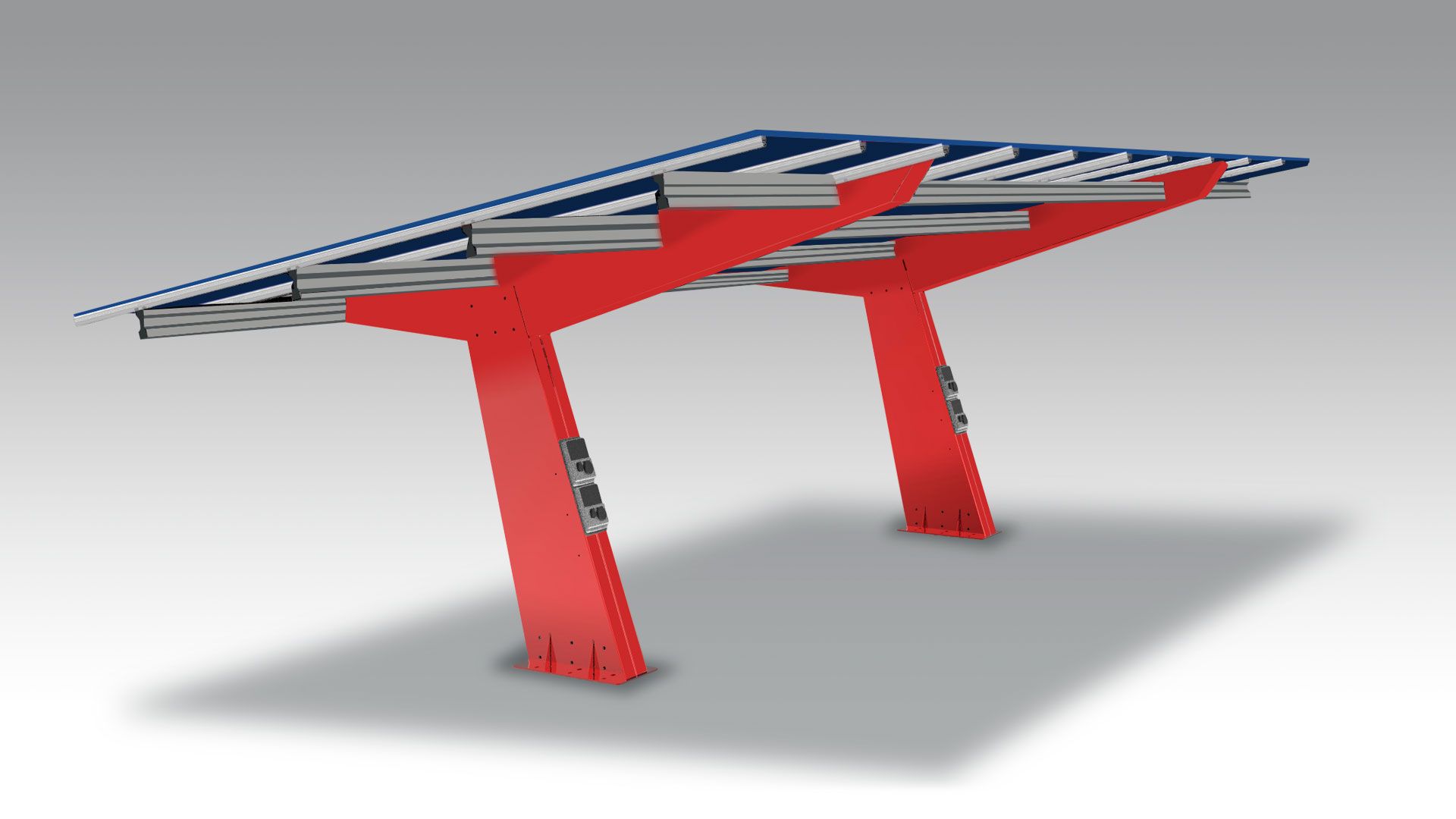
Normally, tertiary sector facilities, buildings and infrastructures have sufficient space for both customers and workers to park their vehicles. By making the most of the space available in the car park, it is possible to install photovoltaic canopies.

Installing canopies provides covered space for vehicles and produces solar energy, which can cover part or all of your electricity needs, and/or make it possible to sell the excess energy to the distribution grid.

The structure of the canopy enables the installation of an integrated system for charging electric vehicles that uses a single system to generate clean energy while charging electric vehicles, saving installation time and space.