


This applies to common equipment such as variable speed drives, inverters, uninterruptible power supplies, electric vehicle charging points, office equipment, and LED systems, all of which are found in both industrial applications and everyday use.
When protecting people and installations against potential DC faults or leakage currents, Type A, AC, or F residual current devices do not detect DC leakage currents. This can compromise service continuity, cause fires, or even prove fatal.
When installing residual current devices in series upstream of the load, the device should not be selected based solely on the type of load. Other factors must also be considered to ensure proper coordination of the protection system.
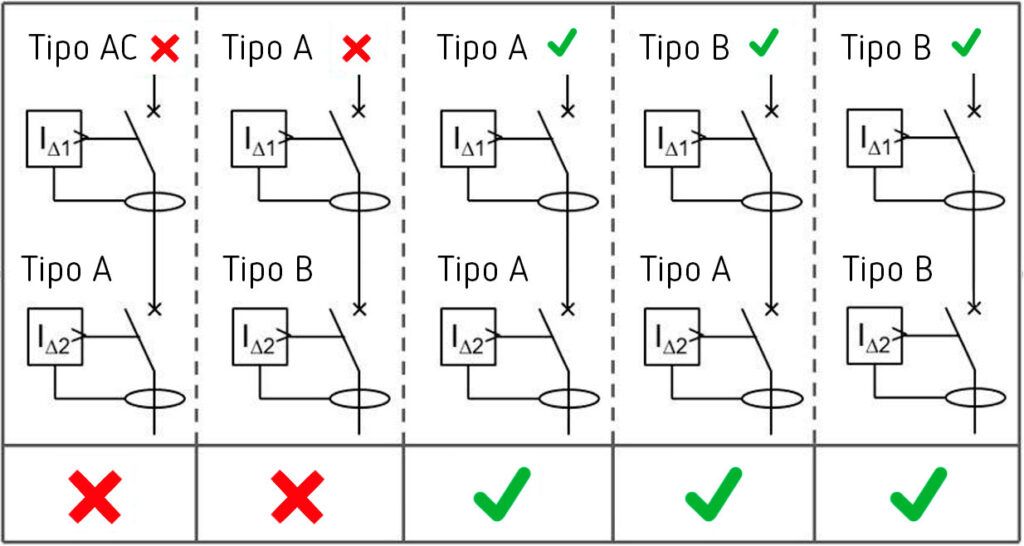
To ensure vertical selectivity, three conditions must always be met: current, time, and type selectivity.

The sensitivity of an upstream residual current device must always be lower than that of the device installed downstream. This ensures that, if a leakage current occurs, the device closest to the affected part of the installation trips first, preventing the entire circuit from being disconnected.
To ensure this selectivity, the upstream device should be set with a residual operating current approximately three times higher than that of the downstream device.

As with sensitivity, the trip time of an upstream residual current device must always be longer than that of the device installed downstream.
This ensures that, in the event of a leakage current, the residual current device closest to the fault trips first. To maintain time selectivity, the upstream time delay should be set to approximately twice that of the downstream device.

Another important consideration is selecting the correct type of residual current protection. The upstream device should always be of the same type as, or a higher type than, the device installed downstream.
This ensures service continuity and prevents nuisance trips that could affect the entire installation.

To meet the growing need to protect these types of loads, Circutor offers a wide range of Type B residual current protection solutions.
The RGU-100B is a residual current relay designed for use with WGB series current transformers and RS-485 communications via Modbus RTU. It supports transformers with internal diameters of up to 140 mm, and can protect loads of up to 630 A.
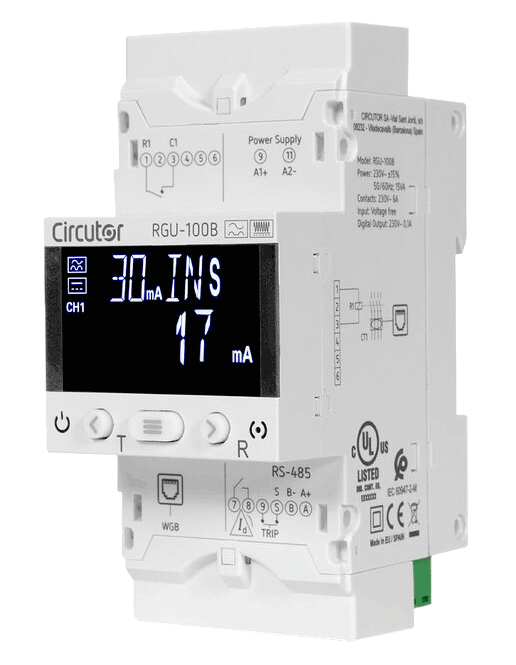
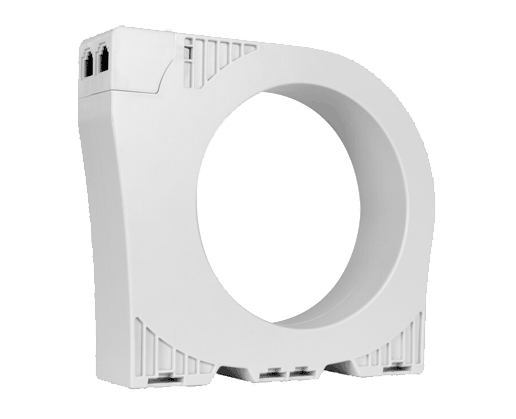
The device can be configured with sensitivities from 30 mA and offers both instantaneous and time-delayed tripping. It also displays the leakage current level at the time of the trip, making it easier to fine-tune the sensitivity to suit the installation's requirements.
In addition, it records AC leakage current, DC leakage current, or the combined AC+DC leakage current, helping to identify the source of the fault quickly and easily.
The RGU-110B is a Type B residual current protection electronic relay designed to detect and manage leakage currents in modern electrical installations.
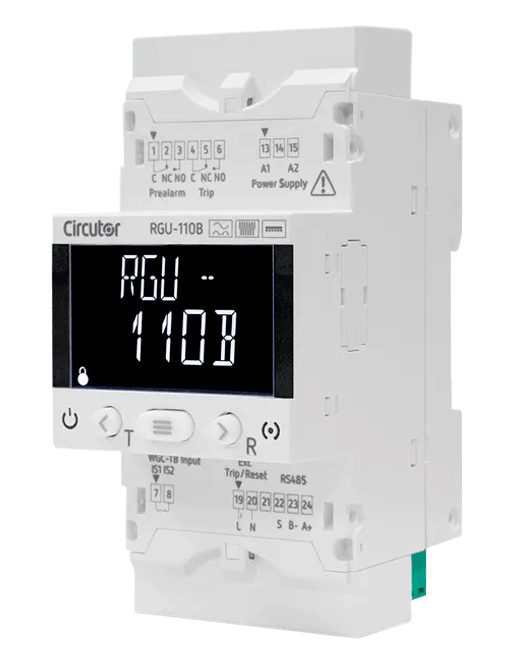
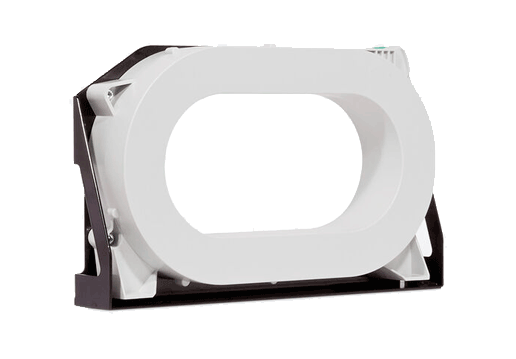
Together with the WB transformers, it protects and monitors all electrical installations where, due to the type of load, the applicable law or manufacturer's requirement, it is necessary to install Type B earth leakage protection.
The RGU-110B series features transformers to protect loads up to 4000 A, allowing proper type coordination in sub-panels or main panels, and the protection of large loads such as variable speed drives.
The CBS-400B is a residual current relay designed for use with WGB series current transformers and RS-485 communications via Modbus RTU. It supports transformers with internal diameters of up to 140 mm, and can protect loads of up to 630 A.
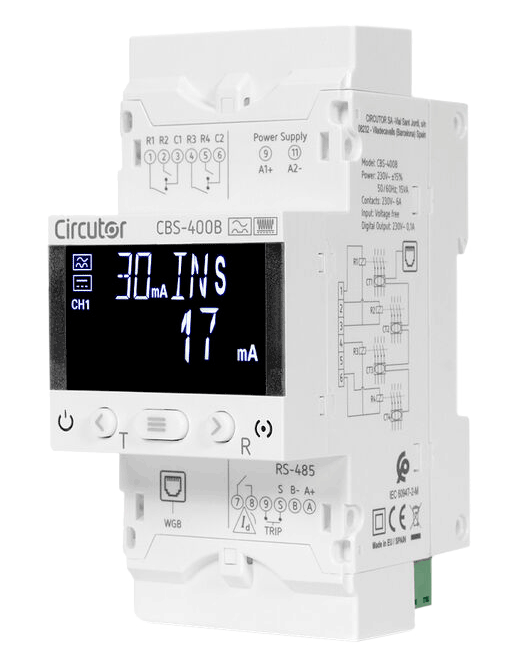
The device can be configured with sensitivities from 30 mA and provides four independent channels to protect four completely separate circuits within just three DIN rail modules. It also offers both instantaneous and time-delayed tripping.
Like the RGU-100B, it displays and records AC leakage current, DC leakage current, or the combined AC+DC leakage current.

We recommend that you carefully review the manuals for equipment such as three-phase variable speed drives, inverters, charging points, and uninterruptible power supplies.
Manufacturers of AC/DC conversion equipment specify that the only way to ensure adequate protection is through the use of Type B residual current devices.
This ensures that the protection system operates correctly, helps prevent accidents, and maintains continuity of the electrical supply.

WRITTEN BY CIRCUTOR
Vial Sant Jordi s/n – 08232
Viladecavalls, Barcelona (Spain)
+34 93 745 29 00
Contact
After-Sales and Technical Assistance
+34 93 745 29 19
Send enquiry

© 2026 CIRCUTOR.COM | All rights reserved.