TYPES OF RESIDUAL CURRENT PROTECTION FOR EVs

Choose the most suitable protection based on the requirements of your charging point

Specific residual current protection for electric vehicles, based on Type A solutions with 6 mA DC component detection and systems with automatic reclosing, improves the operational efficiency of charging installations by ensuring a fast and precise response to potential faults. These devices minimize unnecessary interruptions, optimizing availability times and significantly reducing service downtime.

Furthermore, this technology not only provides a high level of protection against electrical leakage currents, but also contributes to the reliability and continuity of charging infrastructures. Its integration ensures more efficient operation, adapted to the requirements of electric vehicles, providing safe, stable installations prepared for intensive use.

Residual current protection
for AC chargers

For years, residual current protection has focused on the safety of people and property, guaranteeing continuity of service in electrical installations. This range includes both Type A + 6 mA DC residual current protection devices and Type B devices, ensuring continuity of supply. They allow consumers to use these points safely, in compliance with the applicable standards and ensuring peak operational performance.

Discover protection for AC chargers
Residual current protection
for AC/DC chargers

Fast-charging stations contain power electronics within the charger, including AC/DC converters. To adequately protect an electric vehicle (EV) charger, the ideal solution is to install Type B residual current protection, capable of monitoring and responding when an AC or DC leakage current occurs in the circuit originating from the converter.

Discover protection for AC/DC chargers
RESIDUAL CURRENT PROTECTION FOR ELECTRIC VEHICLES

How can the vehicle charging output be protected in AC chargers?

During the electric vehicle charging process, DC fault currents may occur. Given this possibility, a conventional Type AC or A RCCB would not be able to operate correctly, as it could lead to untimely trips or, in the worst case, stop protecting altogether.

When an Electric Vehicle is connected to a charging station (mode 3) for battery charging purposes, the protection measures required by the IEC 61851 and IEC 60364 standards must be taken into account.

If, in the charging current circuit, a DC residual current greater than IΔn DC ≥ 6 mA occurs in the event of an insulation fault, a Type B residual current device (RCD) is required, or other appropriate measures must be taken, such as the use of a Type A device with 6 mA DC residual current monitoring.

The reason for this requirement is that the operation of a Type A residual current device (RCD) may be adversely affected by DC residual currents exceeding IΔn DC ≥ 6 mA.

What do the regulations require?

IEC 61851-1 Electric Vehicle conductive charging system – Part 1: General requirements:

Electric vehicle supply equipment (EVSE) may have one or more connection points for supplying power to EVs.

Where connection points can be used simultaneously and are connected to a common input terminal of the EVSE, they must incorporate individual protection within the equipment.

EV supply equipment incorporating a residual current device (RCD) and not using the electrical isolation protection measure must comply with the following requirements:

The connection point must be protected by an RCD with a rated residual current not exceeding 30 mA.

The RCDs protecting the connection points must be at least Type A.

The RCDs must comply with one of the following standards: IEC 61008-1, IEC 61009-1, IEC 60947-2 and IEC 62423.

The RCDs must disconnect all active conductors.

This applies to both single-phase and three-phase connection points.

When electric vehicle supply equipment is fitted with a socket outlet or vehicle connector for AC use, in accordance with IEC 62196 (all parts), appropriate protection measures must be adopted, namely:

Type B RCCB.

Type A RCCB and suitable equipment that ensures disconnection of the power supply in the event of a DC short-circuit current greater than 6 mA.

IEC 60364-7-722 – Power supply for electric vehicles

722.531 – Devices for protection against indirect contact by automatic disconnection of the supply

722.531.3 – Residual Current Devices (RCDs)

722.531.3.101 Except in the case of circuits using the electrical separation protective measure, each connection point must be protected by its own RCD, which must be at least Type A, with a rated residual current not exceeding 30 mA.

When the electric vehicle charging station is equipped with a socket outlet or vehicle connector complying with the EN 62196 series of standards, measures must be taken against leakage currents with a DC component, unless these are already incorporated into the electric vehicle charging station. The appropriate measures for each connection point must be:

Type B RCD

Type A RCD and suitable equipment that ensures disconnection of the power supply in the event of fault currents with a DC component exceeding 6 mA.

RCDs must comply with one of the following standards: EN 61008-1, EN 61009-1, EN 60947-2 or EN 62423.

How can the vehicle charging output be protected in fast DC chargers?

Since the connection between the charger and the Electric Vehicle during charging in mode 4 is carried out at DC voltage and current, protection of both the connection and the Electric Vehicle itself must be provided by means of an insulation monitoring device (IMD), which continuously monitors the insulation.

Among the connector standards used, the CHAdeMO and CCS modes are available. CHAdeMO is a DC charging standard for electric vehicles that enables seamless communication between the vehicle and the charger, and is also the name of its manufacturer.

What does the regulation require?

IEC 61851-23 – SElectric vehicle conductive charging system – Part 23: DC electric vehicle supply equipment

The secondary circuit (output side) of the DC power supply shall be designed as an isolated system, and protection measures shall be applied in accordance with IEC 60364-4-41:2005 Clause 411.

Where an insulation monitoring device (IMD) is used, it shall comply with IEC 61557-8 or an equivalent standard.

SERVICE CONTINUITY

Residual current protection for AC chargers

Discover our residual current protection solutions for electric vehicle charging points, designed for installation in electrical panels, ensuring safety, compliance with national regulations (ITC-BT-52) and international standards (IEC 60364-7-722), and maximum operational continuity.

Our range includes Type A + 6 mA DC residual current protection devices to protect against AC and DC leakage currents up to 6 mA, ensuring tripping in the event of any insulation fault in the electric vehicle and compatibility with all charging applications. To ensure continuity without human intervention, we offer automatic reclosing solutions that automatically restore the power supply following temporary faults, without having to travel to and interact with the electrical panel.

Electric Mobility

Discover our Electric Mobility range: Electric Vehicle Chargers..

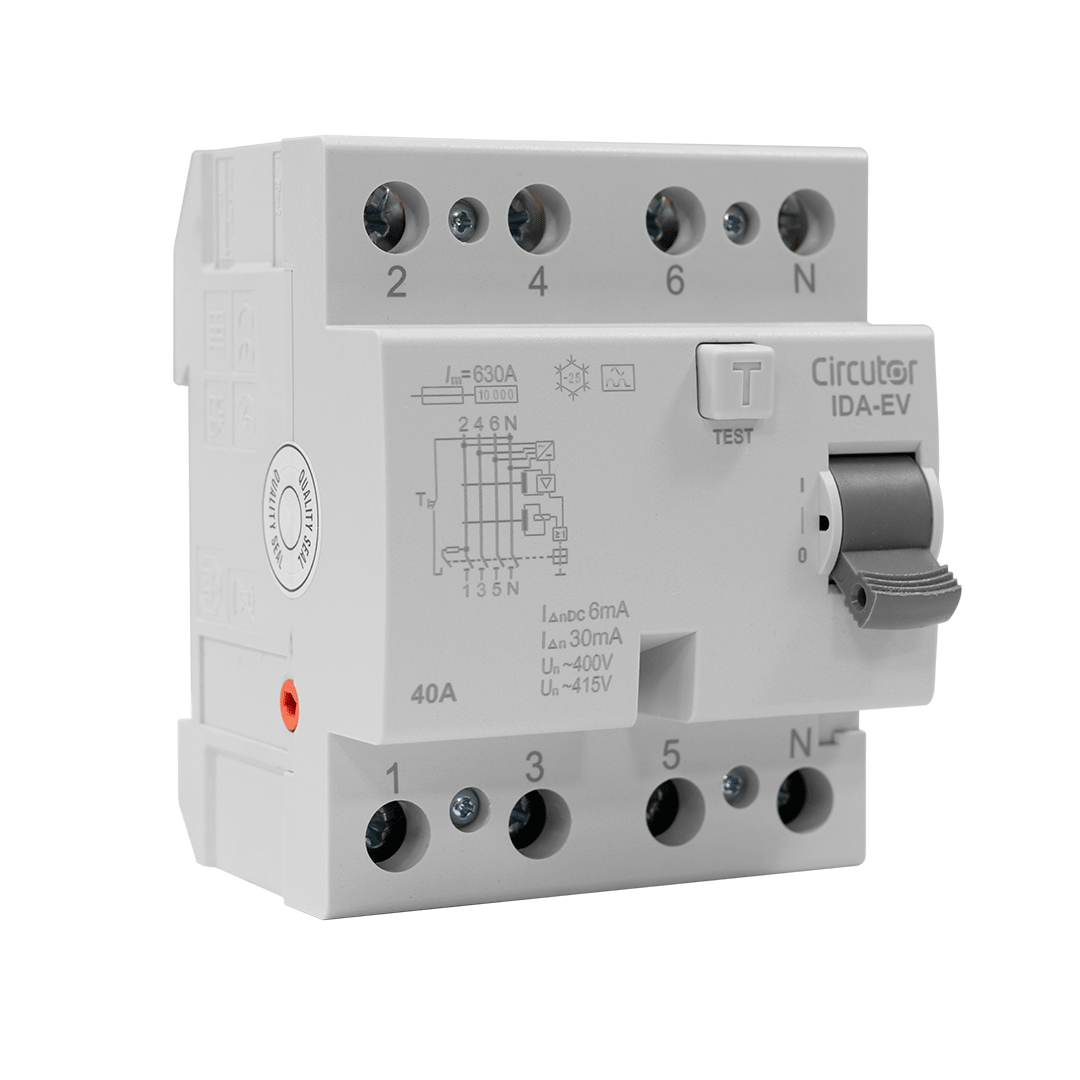
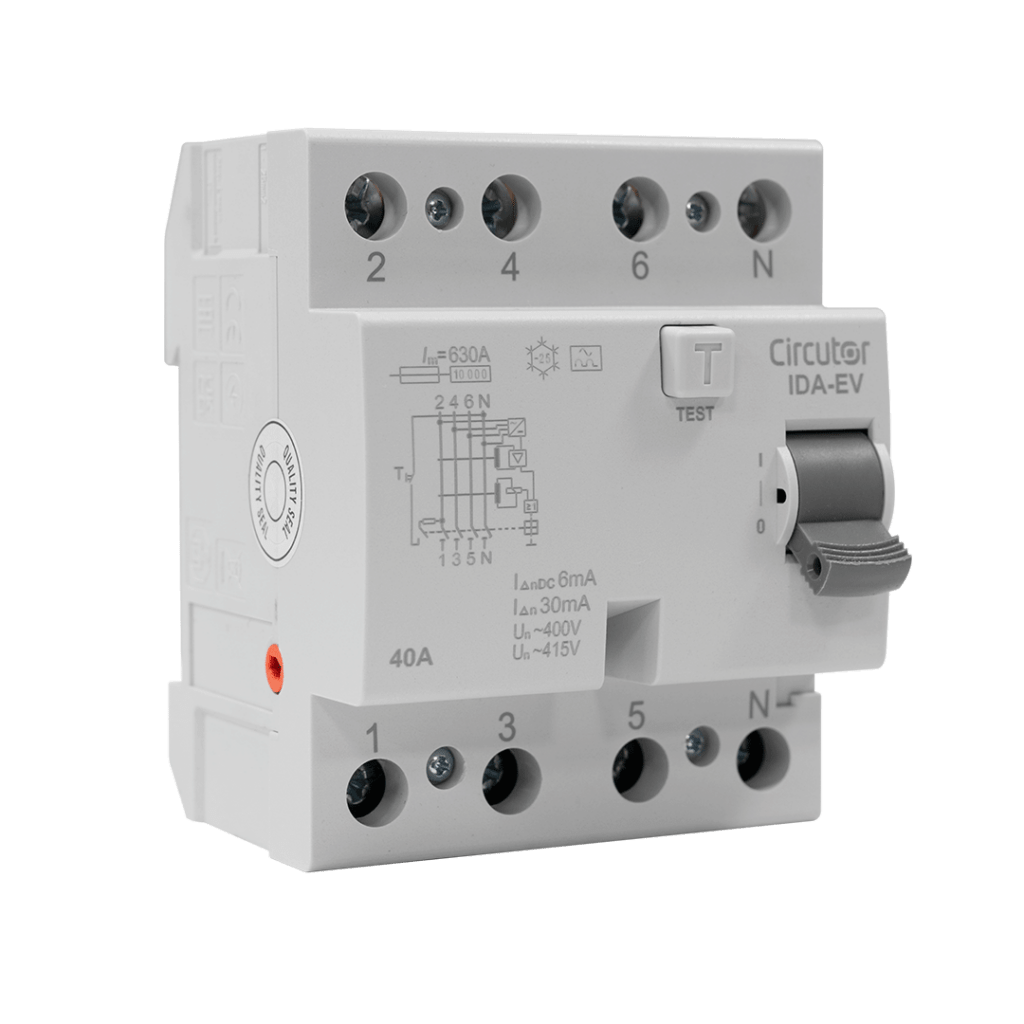
IDA-EV

RCCB protection for charging points

More info on the IDA-EV

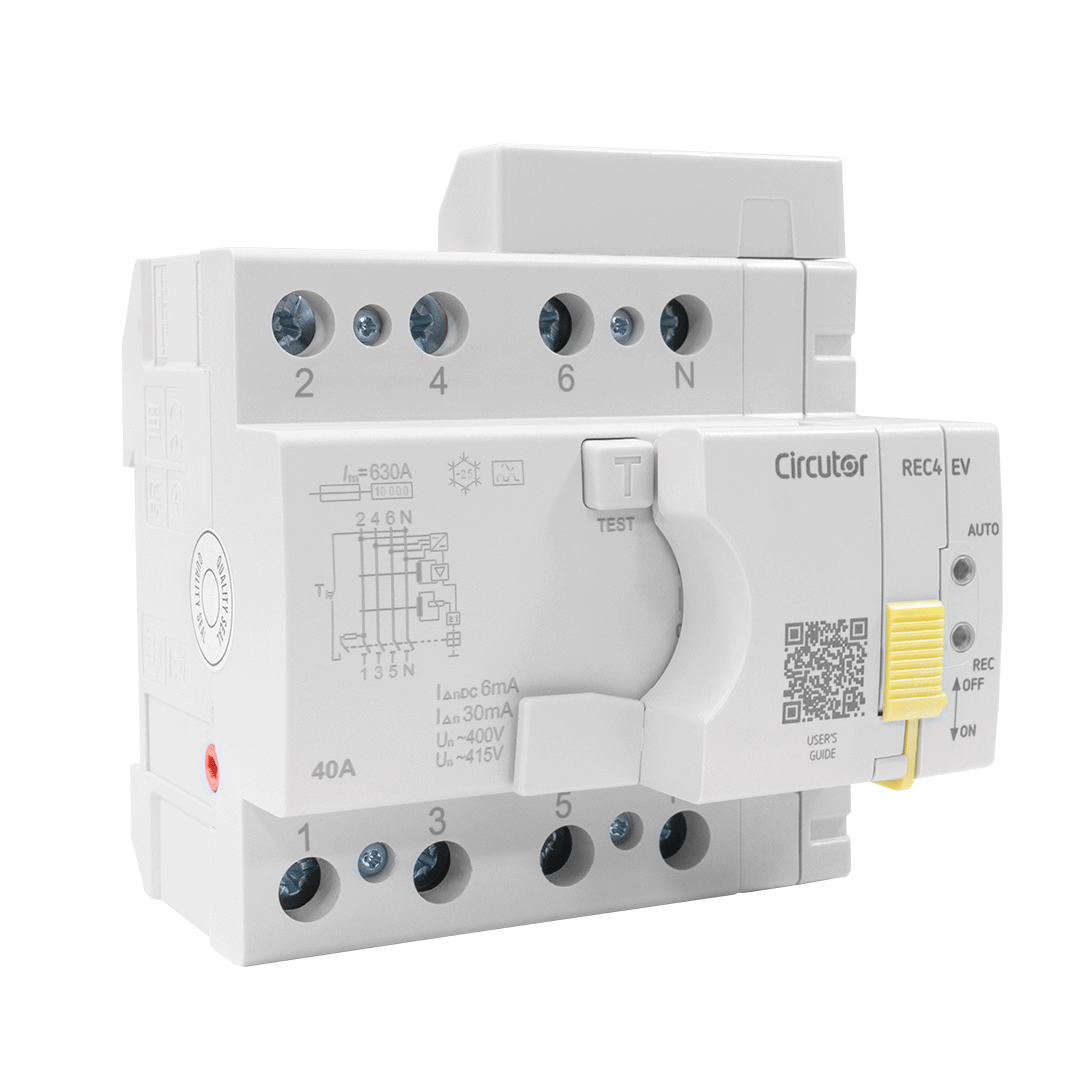
REC4-EV-C

Reclosing 6 mADC type A RCCB with monitoring and status output

More info on the REC4-EV-C

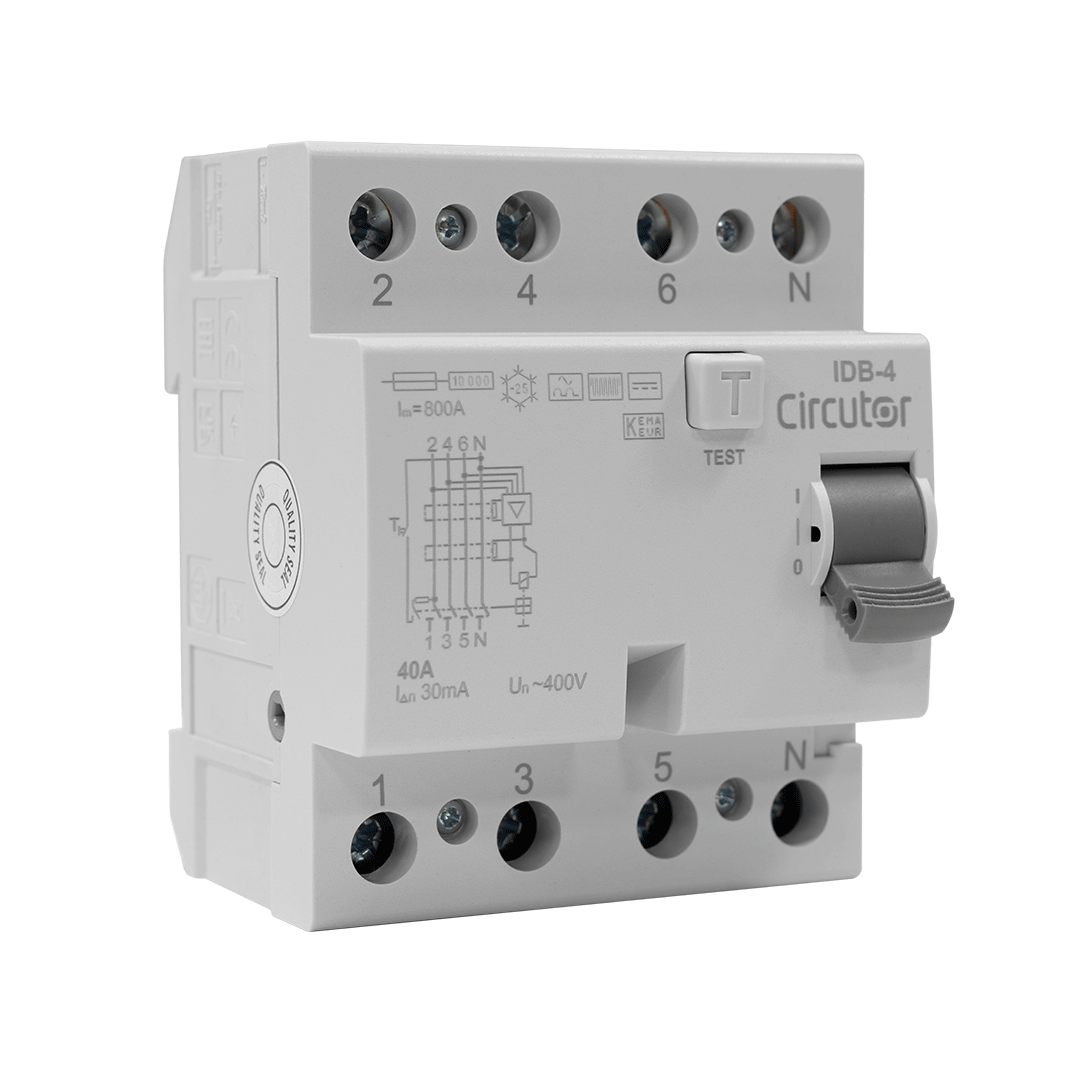
IDB-4

Type-B RCCB

More info on the IDB-4

RESIDUAL CURRENT PROTECTION FOR AC CHARGERS

Most recommended installations

HOMES

CAR PARKS

FLEETS

PUBLIC ROADS

SERVICE CONTINUITY

Residual Current Protection for AC/DC Chargers

Type B residual current protection is a key element in ensuring electrical safety in installations with loads that may produce DC leakage currents. It is designed to protect both people and equipment in circuits where there is a risk of earth leakage involving direct current (DC), alternating current (AC), pulsating AC, or mixed leakage currents comprising both AC and DC components. These types of leakage currents are common in electronic loads used throughout industrial, commercial and service-sector installations.

Type B residual current protection is used as a universal solution for protecting loads such as variable speed or frequency drives, inverters, cold storage systems, HVAC systems, UPSs and electric vehicle charging equipment.

Electric Mobility

Discover our Electric Mobility range: Electric Vehicle Chargers..

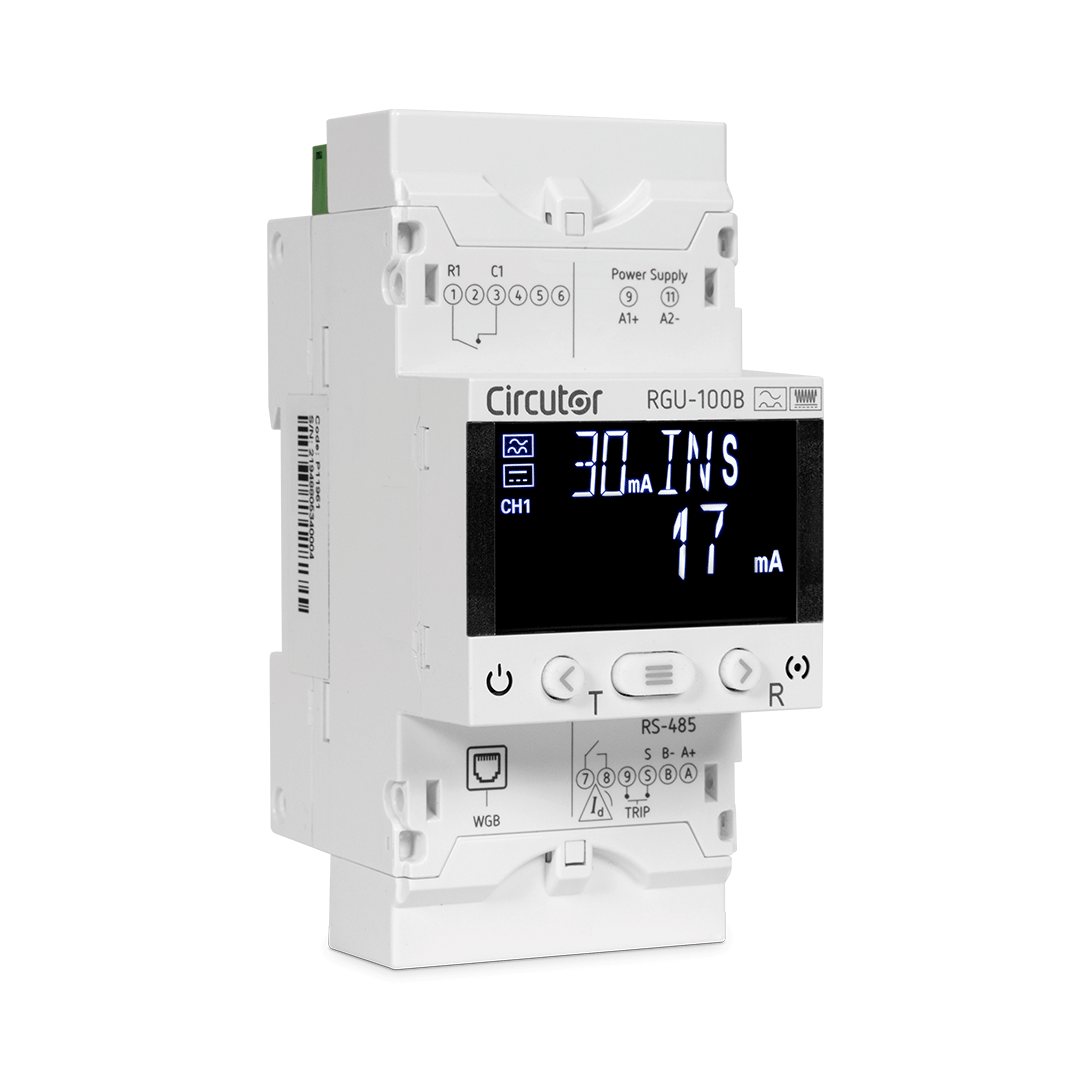
RGU-100B

Type B residual current protection relay

More info on the RGU-100B

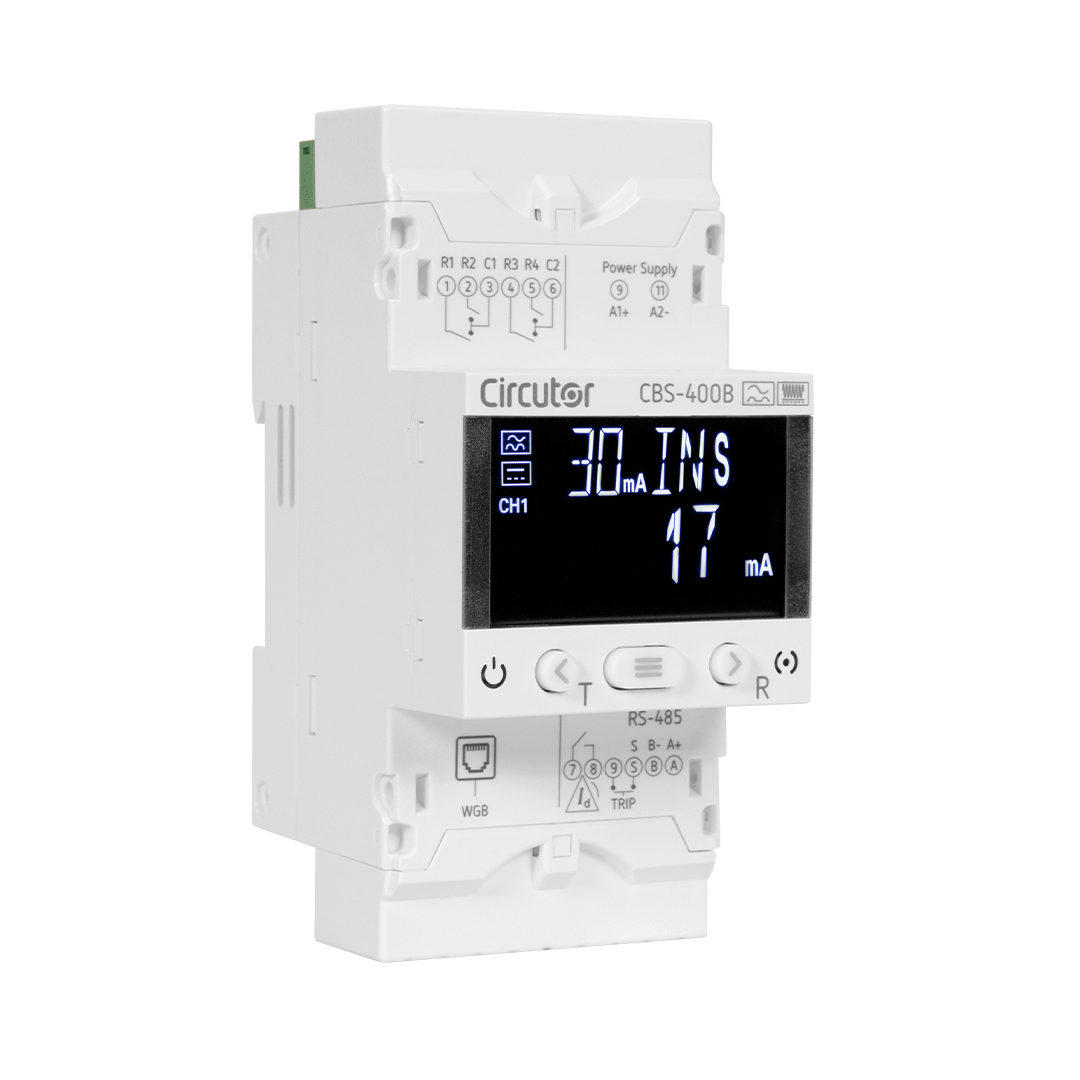
CBS-400B

4-channel Type B residual current protection relay

More info on the CBS-400B

RESIDUAL CURRENT PROTECTION FOR AC/DC CHARGERS

Most recommended installations

PUBLIC CAR PARK

PARKINGS

FLEETS

PUBLIC ROADS